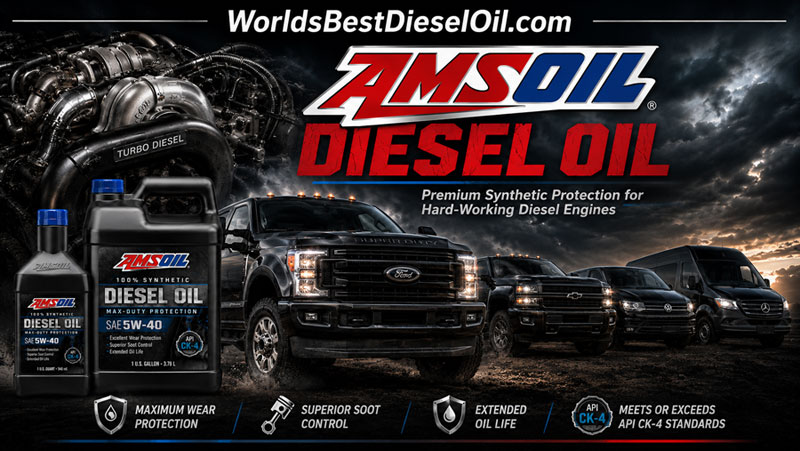
For the 2014 Ford F-250 HD Pickup with the 6.7L 8-cylinder Diesel Turbo engine (Engine Code T), the oil capacity is 13.1 quarts (including filter). Recommended viscosities vary by temperature: 10W-30 is recommended for normal usage, while 5W-40 is suggested for severe operations or when using biodiesel blends (up to B20). AMSOIL recommends using Signature Series Max-Duty Synthetic Diesel Oil paired with an AMSOIL Oil Filter for optimal protection.
What oil does a 2014 Ford F-250 HD 6.7L Diesel take?
The required oil viscosity depends on your operating environment and fuel type. For normal usage, the manufacturer recommends 10W-30. For severe operations, 5W-40 is recommended. If you are using biodiesel blends (up to B20), it is recommended to use either 5W-40 or 15W-40 oil.
AMSOIL product recommendations
To simplify your maintenance, AMSOIL provides several high-performance oil and filter combinations specifically suited for the Ford Power Stroke diesel engine. Below are the primary recommendations based on your service needs.
Engine Oil Recommendations
| Product Name | Viscosity | Product Code |
|---|---|---|
| AMSOIL Signature Series Max-Duty Diesel Oil | 5W-40 | DEOQT-EA |
| AMSOIL Signature Series Max-Duty Diesel Oil | 10W-30 | DTTQT-EA |
| AMSOIL Heavy-Duty Synthetic Diesel Oil | 5W-40 | ADOQT-EA |
| AMSOIL Heavy-Duty Synthetic Diesel Oil | 10W-30 | ADNQT-EA |
Oil Filter Recommendations
Air Filter Recommendation
| Product Name | Product Code |
|---|---|
| WIX Air Filter | 49902-EA |
Engine Oil Viscosity Guide
| Temperature Range | Recommended Viscosity |
|---|---|
| Below 10°C | 0W-30, 0W-40 |
| Above -18°C | 10W-30 (Normal) / 5W-40 (Severe) |
| Above -7°C | 10W-30 (Normal) / 5W-40 (Severe) |
| Above -29°C | 5W-40 |
Note: If biodiesel fuel blends (B20 max) are used, the use of 5W-40 or 15W-40 oil is recommended.
How much oil does it take with a filter change?
The engine requires 13.1 quarts of oil when performing a service that includes the replacement of the oil filter. It is essential to check the oil level after refilling to ensure accuracy.
Engine Oil Specifications & Details
| Specification/Detail | Value |
|---|---|
| Oil Capacity (with filter) | 13.1 Quarts |
| Oil Drain Plug Torque | 19 ft/lbs |
| AMSOIL Lookup Oil Grade | SEO84 |
Manufacturer Specification Note: The AMSOIL lookup note references Ford Material Engineering Specification WSS-M2C171-F1. In 2016, Ford superseded the original recommendation of WSS-M2C171-D with WSS-M2C171-F1. Ford continues to recommend oils meeting WSS-M2C171-F1 for the 6.7L diesel engine rather than standard CK-4 motor oils, as testing has shown some CK-4 formulations may provide inadequate wear protection compared to earlier CJ-4 formulations.
Common diesel oil-related concerns and how AMSOIL products may help
Diesel engines operating under heavy loads or in extreme environments face unique lubrication challenges. The following table outlines common concerns and how specific AMSOIL products can support engine longevity.
| Concern | Why it matters | AMSOIL Product | How it may help | Important Limitation |
|---|---|---|---|---|
| Engine Wear | High-pressure diesel environments cause friction. | DTTQT-EA | Delivers 6X more wear protection in testing. | Requires proper service intervals. |
| Extreme Temperatures | Viscosity changes can affect lubrication. | DEOQT-EA | Excels in extreme temperatures and maintains viscosity. | Must match temperature requirements. |
| Contaminants | Small particles can cause abrasive wear. | EAO98-EA | Provides 99% efficiency at 20 microns. | Filter must be replaced regularly. |
| Fuel Dilution/Biodiesel | B20 blends can affect oil properties. | ADOQT-EA | Supports heavy-duty diesel requirements. | Follow manufacturer viscosity guidelines. |
Diesel maintenance notes for this vehicle
- Oil Level Verification: Always check the oil level after refilling to ensure you have not overfilled or underfilled the 13.1-quart capacity.
- Drain Plug Torque: Ensure the oil drain plug is tightened to 19 ft/lbs to prevent leaks or damage to the pan.
- Biodiesel Considerations: If your vehicle utilizes B20 biodiesel blends, prioritize using 5W-40 or 15W-40 viscosity oils as recommended by the manufacturer.
- Filtration Efficiency: Using high-efficiency filters like the AMSOIL Oil Filter can help reduce engine wear by capturing small, wear-causing contaminants.
Common maintenance concerns for this vehicle
Owners of the 6.7L Power Stroke diesel should maintain a proactive approach to several key areas:
- Turbocharger Protection: Given the turbocharger’s role, maintaining high-quality lubrication and clean air filtration is critical.
- Fuel System Integrity: Diesel engines of this era require specialized attention to fuel filtration and injector health.
- Cooling System: Monitoring cooling system integrity is essential for managing the heat generated by heavy-duty towing.
- Exhaust Aftertreatment: Owners should monitor diesel exhaust fluid (DEF) management and aftertreatment systems regularly.
Recall, TSB, and manufacturer communication notes
Official NHTSA recall research for the 2014 Ford F-250 HD Pickup returned no recall records at this time. Additionally, no consumer complaint records were found in the NHTSA database for this specific year/make/model combination. However, owners should always verify open recalls by VIN, as applicability can depend on production date, trim, and equipment.
About this vehicle
The 2014 Ford F-250 HD is a heavy-duty pickup truck belonging to the Ford Super Duty series. This series was introduced in 1999 as a dedicated heavy-duty expansion of the F-Series, designed with specialized chassis components to provide significantly higher payload and towing capacities compared to consumer-oriented models like the F-150. As a Class 2 or 3 truck, the F-250 is engineered for demanding tasks that require robust structural integrity.
This specific vehicle is equipped with the Ford Power Stroke V8 diesel engine. The Power Stroke engine family is a hallmark of Ford’s heavy-duty lineup, designed to provide the high torque necessary for towing and commercial applications. Because this vehicle utilizes a large-displacement turbo diesel engine, maintenance focus typically shifts toward specialized requirements such as fuel filtration, cooling system integrity, and diesel-specific exhaust aftertreatment monitoring.
While this vehicle is part of the Super Duty family, users should note that the F-250 occupies a specific niche between light-duty pickups and medium-duty chassis cabs like the F-650. Given the complexity of the 6.7L diesel powertrain, it is essential to verify specific service intervals for turbocharger components and heavy-duty cooling systems. Because technical details regarding specific engine codes (such as ‘T’) and exact performance outputs can vary by configuration, owners should always cross-reference their specific VIN with official Ford service manuals.
Common questions about this vehicle’s diesel oil and maintenance
What is the correct oil capacity for my 2014 F-250 6.7L?
The engine requires 13.1 quarts of oil when replacing the filter. Always check the level after refilling.
Can I use CK-4 oil in my 2014 Ford 6.7L Diesel?
The AMSOIL lookup note indicates that Ford recommends oils meeting specification WSS-M2C171-F1 rather than standard CK-4 motor oils for the 6.7L engine to ensure adequate wear protection.
What viscosity should I use for severe towing?
The manufacturer recommends 5W-40 for severe operations. AMSOIL offers several options, including DEOQT-EA (Signature Series) and ADOQT-EA (Heavy-Duty).
How much torque is needed for the oil drain plug?
The oil drain plug should be torqued to 19 ft/lbs.
Does biodiesel affect my oil choice?
Yes. If using B20 biodiesel blends, it is recommended to use 5W-40 or 15W-40 oil.
How can I protect my turbocharger during maintenance?
Using high-quality synthetic diesel oils and efficient filtration, such as the AMSOIL Oil Filter (EAO98-EA), can help support engine and turbocharger longevity.
Disclaimer: Always verify all maintenance specifications, capacities, and torque values using your official Ford owner’s manual or a professional service database before performing any vehicle repairs.