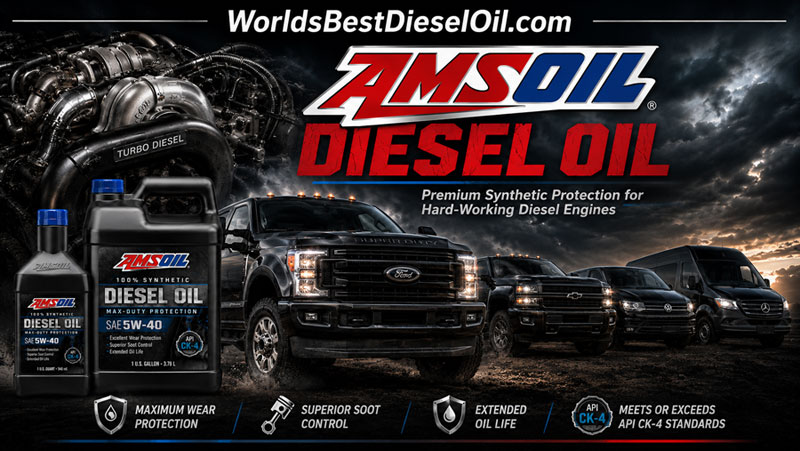
For the 2023 Ford F-350 Pickup with the 6.7L 8-cylinder Engine Code [M] Diesel Turbo, the engine oil capacity is 15 quarts with a filter change. Recommended viscosities include 10W-30 for normal usage and 5W-40 for severe operations. AMSOIL recommends using Signature Series 10W-30 Max-Duty Diesel Oil (DTTQT-EA) paired with an AMSOIL Oil Filter (EAO98-EA).
What oil does a 2023 Ford F-350 6.7L Diesel take?
The 2023 Ford F-350 with the 6.7L diesel engine requires specific viscosities depending on operating temperatures and usage severity. The AMSOIL lookup oil grade is SEO84. For normal usage, the manufacturer recommends 10W-30, while 5W-40 is recommended for severe operations. If using biodiesel fuel blends (up to B20), the use of 5W-40 or 15W-40 is recommended.
The total engine oil capacity for the 6.7L diesel engine in the 2023 Ford F-350 is 15 quarts when performing a service that includes a new oil filter. It is critical to check the oil level after refilling to ensure accuracy.
AMSOIL product recommendations
The following AMSOIL products are recommended for the 2023 Ford F-350 6.7L Diesel engine based on available application data.
Engine Oil Options
| Product Name | Code |
|---|---|
| AMSOIL Signature Series 10W-30 100% Synthetic Max-Duty Diesel Oil | DTTQT-EA |
| AMSOIL 10W-30 Heavy-Duty 100% Synthetic Diesel Oil | ADNQT-EA |
Oil Filter Options
Coolant & Transmission
| Product Name | Code |
|---|---|
| AMSOIL Passenger Car & Light Truck Antifreeze & Coolant | ANTPC1G-EA |
| AMSOIL Propylene Glycol Antifreeze and Engine Coolant | ANT1G-EA |
| AMSOIL Signature Series ULV 100% Synthetic ATF | ULVPK-EA |
Engine Oil Specifications
| Specification | Details |
|---|---|
| Oil Capacity | 15 quarts (with filter) |
| Drain Plug Torque | 19 ft/lbs |
Engine Oil Viscosity Guide
| Temperature Range | Recommended Viscosity |
|---|---|
| All Temperatures | 0W-40 |
| Above -18°C | 10W-30 (Normal) / 5W-40 (Severe) |
| Above -7°C | 10W-30 (Normal) / 5W-40 (Severe) |
| Above -29°C | 10W-30 (Normal) / 5W-40 (Severe) |
Note: If biodiesel fuel blends (B20 max) are used, the use of 5W-40 or 15W-40 oil is recommended.
How much oil does it take with a filter change?
Diesel maintenance notes for this vehicle
Maintaining a Power Stroke diesel engine requires attention to high-stress components. Owners should focus on rigorous fuel system care, cooling system integrity, and exhaust aftertreatment maintenance to ensure long-term reliability. Because these engines are designed for heavy-duty work cycles, following specific viscosity recommendations is vital for protecting turbochargers and managing soot loading.
Common diesel oil-related concerns and how AMSOIL products may help
| Concern | Why it matters | AMSOIL product from this lookup | How it may help | Important limitation |
|---|---|---|---|---|
| Severe-service towing | Increases engine heat and stress. | DTTQT-EA | Provides outstanding extreme-pressure protection. | Requires proper viscosity selection. |
| Engine Wear | Contaminants can cause damage. | EAO98-EA | Provides 99% filtering efficiency at 20 microns. | Filter must be replaced per service intervals. |
| Extreme Temperatures | Affects oil flow and viscosity. | DTTQT-EA | Excels in extreme temperatures. | Not confirmed from source data for specific limits. |
Common maintenance concerns for this vehicle
- Fuel System Integrity: Diesel engines require high-quality fuel and regular attention to fuel system care.
- Cooling System Maintenance: Ensuring the cooling system is free of contaminants is essential for heavy-duty work cycles.
- Exhaust Aftertreatment: Regular monitoring of exhaust systems is a key part of diesel ownership.
Recall, TSB, and manufacturer communication notes
Official NHTSA recall research for the 2023 Ford F-350 Pickup returned no recall records at this time. However, owners should always verify open recalls by VIN, as applicability can depend on production date, trim, and specific equipment. This document does not include official TSB (Technical Service Bulletin) data.
About this vehicle
The 2023 Ford F-350 is a prominent member of the Ford Super Duty series, engineered to provide significantly higher payload and towing capacities than consumer-oriented models like the F-150. As a Class 2 or 3 truck (depending on GVWR), it features dedicated heavy-duty chassis components designed to handle demanding work cycles in sectors such as agriculture, construction, and heavy-duty towing.
At its core is the Ford Power Stroke V8 diesel engine. The Power Stroke family is a cornerstone of Ford’s heavy-duty lineup, providing the high torque necessary for commercial hauling and heavy loads. Because these engines operate in high-stress environments, they require specialized maintenance protocols compared to gasoline counterparts. Owners typically focus on rigorous fuel system care, cooling system integrity, and exhaust aftertreatment maintenance to ensure long-term reliability. Given its role in high-load sectors, maintenance research often centers on heavy-duty filtration requirements and specific diesel-rated oil viscosities.
Common questions about this vehicle’s diesel oil and maintenance
What is the oil capacity for my 2023 F-350 6.7L Diesel?
The engine requires 15 quarts of oil when replacing the filter.
What viscosity should I use for severe service towing?
The manufacturer recommends 5W-40 for severe operations. AMSOIL Signature Series DTTQT-EA is designed to excel in extreme temperatures.
How much torque is needed for the oil drain plug?
The oil drain plug should be torqued to 19 ft/lbs.
What if I use biodiesel fuel blends like B20?
If biodiesel fuel blends (B20 max) are used, the manufacturer recommends using 5W-40 or 15W-40 oil.
Does AMSOIL offer a high-efficiency filter for this truck?
Yes, the AMSOIL Oil Filter (EAO98-EA) provides 99% filtering efficiency at 20 microns.
How can I check for active recalls on my F-350?
Owners should verify open recalls by checking their specific VIN through official manufacturer or NHTSA channels.
Disclaimer: Not all information provided is intended to replace the vehicle owner’s manual. Always consult your manufacturer’s official service guide for precise maintenance specifications and verify all recall information via VIN.